
Cutting block walls is a saw-and-rebuild job; poured concrete is a controlled core-cut. Here is how the foundation type shapes the install and the price.
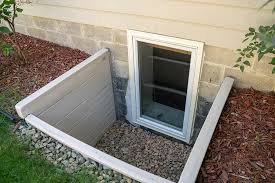
You can install an egress window in either a concrete-block foundation or a poured concrete foundation, and each has its own cutting plan, lintel detail, and water-management path. Block walls are common in pre-1980 Ohio homes; poured concrete is standard on newer builds. Here is how each one is approached.
Yes. Block foundations are routine egress work in Ohio because most homes built before 1980 use them. The crew saw-cuts the rough opening, removes the cut block courses, sets a new steel or concrete lintel above the opening, and tucks new block or fill back to the lintel.
Block walls cut quickly because the saw passes through the block and the mortar joints. The crew gives the mortar joints around the opening a clean detail: the cut edge is cleaned and re-tucked so the joint stays sealed.
What the installer reviews on a block wall:
Poured concrete cuts cleanly and the crew uses heavier saws to handle the continuous slab and rebar inside. The cutting plan is designed for the wall.
The crew plans for slurry control on poured-concrete cuts: water-cooled saws produce a wet mix that is contained before it reaches the basement or the yard. On block, dust control is the focus; on poured, slurry control is.
What changes on a poured-concrete cut:
A clean poured-concrete cut produces a smooth frame line for the new window.
The opening is reinforced by a lintel — a steel angle, a steel beam, or a poured concrete cap — that carries the load from above the new opening down into the wall on either side. The lintel detail keeps the wall load supported around the new window over time.
The lintel choice depends on the wall thickness, the opening width, and the load above. On a typical Ohio basement with a wood-framed first floor, a steel angle lintel is common; on a wider opening or under a heavier load, a steel I-beam or a poured cap is used.
What the lintel does:
This is one of the reasons egress is professional foundation work: the structural detail is part of the project from the start.
The water-management path on an egress install runs from the cut edge through the perimeter seal, the well drainage, and the exterior backfill. Each step rebuilds a piece of the water-managed system around the new opening.
The four points where water-management is built into the scope:
The water-management is part of the protection around the new opening; the window and the surrounding system work together.
What belongs in the written scope:
Waterproofing belongs in the conversation before cutting starts, included as a planned part of the project.
Foundation type shapes the scope through cutting time, equipment, and the lintel detail. A standard block opening is a smaller scope; a wider poured-concrete opening with a heavier lintel is a more involved scope.
What changes on the line items:
The cost guide covers the full set of scope drivers.
Clear the work zone before the crew arrives — inside the basement near the wall, and outside along the planned excavation footprint. The crew protects what is left, but the dust, slurry, and debris path is much cleaner if the area is open.
What to move ahead of installation day:
A little prep before installation makes the project faster and cleaner. The installation process guide walks through what to expect on the day of the cut.
Older block foundations have their own characteristics, and newer poured concrete walls have theirs. The build era shapes how the saw cuts, how the lintel bears, and the cutting plan the crew chooses.
What the age tells the installer:
The estimator notes the age during the measured visit. The cutting plan is matched to the wall.
The crew confirms the lintel detail, sets the temporary support, and verifies the bearing before the cut. A planned cut with the right lintel detail keeps the wall load fully supported.
Wall type is one factor among several. Access, depth, drainage, and finish work all shape the scope alongside the foundation type.
Older fieldstone foundations get a tailored review before cutting. A site visit confirms whether the stone bears can carry a new lintel or whether a poured cap is the right approach.
Some interior restoration is part of almost every egress install. The exact scope depends on whether the basement is unfinished, partly finished, or fully finished at the cut line.
The foundation type changes the cutting plan, but it does not change the goal: a code-aware opening that is structurally supported, well-drained, and finished cleanly. Evolve Egress can review the wall, the lintel detail, and the water-management path before you sign anything. Start at /get-a-quote/ to request a free estimate. The egress windows page covers the broader service.
Our team is ready to assist you. Call one of our offices using the phone numbers below or text us at (614) 852-4608