
What a window well install actually costs, what is included in the scope, and the drainage and ladder choices that move the price up or down.
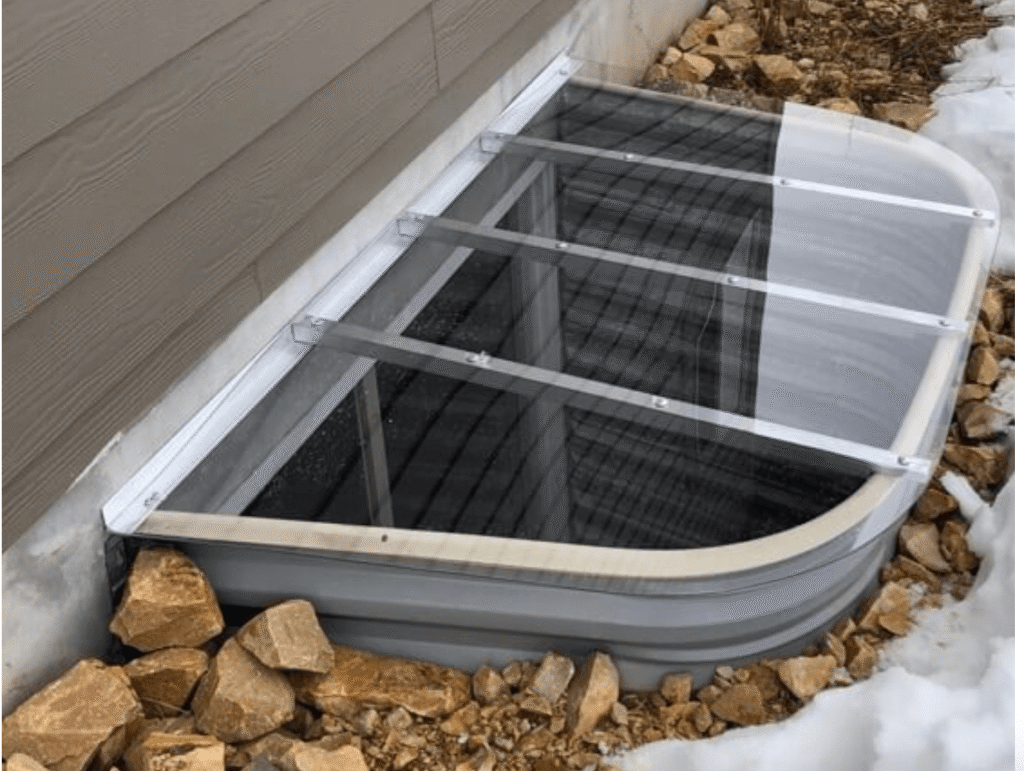
Egress window well installation scope in Ohio is shaped by excavation depth, well size, drainage scope, ladder requirements, and how the well connects to a new or existing basement window. The well is the outside half of the emergency exit and the part of the system that handles water at the foundation. Planning the well alongside the window gives the project a complete scope.
Egress window well installation includes excavation alongside the foundation, setting the well, building the stone base and drain, backfilling, and grading away from the wall. In a full egress project, the well sizing follows the window sizing so the two work together for emergency exit and for water control. A well-only project (a new well around an existing window or an updated well) is a smaller scope but uses the same components. What a well install covers:
The window well guide explains the parts in more depth.
Well scope is shaped by depth, width, material, soil conditions, and equipment access. A shallow well in a side yard with clear access is a smaller scope; a deep well next to a finished patio in a tight side yard is a more involved scope. What shapes the scope line by line:
A measured estimate is the cleanest way to scope the well. The same well dimensions can have a different scope on different lots.
Drainage shapes how a well performs through Ohio’s seasons. The scope depends on how the drain ties out: a stone-filled sump under the well is the simplest version, a dedicated tie-in to the foundation drain is a step up, and a daylight outlet through the yard is its own scope. The drainage options most Ohio installers use:
Drainage is part of every egress well in Ohio, where freeze-thaw cycles and heavy summer storms call for a complete water-management plan. A working drain is what makes the well perform season after season.
A ladder is required when the well is deep enough that an adult uses one to climb out. Your installer pulls the current Ohio threshold as part of the permit, so the ladder spec is set before the well is dug. The ladder is permanently attached, sized to bear weight, and installed so it works alongside the operable section of the window. A clean ladder layout supports the window operation and the climb-out path. What gets verified at inspection:
Ohio code sets minimum size and sill-height requirements for emergency escape openings — your installer pulls current specs as part of the permit. The same permit pulls the current ladder rule.
Replacing or installing the cover at the same time as the well often makes sense. The cover sizes to the well rim, and same-day install lets the crew confirm it opens from below before they leave. When the cover is added with the well:
See the window well guide for cover decisions and material trade-offs.
The well is the second half of the emergency exit and the front line of water management at the new opening. The window and the well are designed together so the full system works as one. What the well does that the window cannot:
A strong egress project treats the window, the well, and the drainage as one system. Use the egress cost guide for the window-side scope drivers and price the well alongside the window.
The three common well materials in Ohio are galvanized steel, composite plastic, and concrete block. Each handles soil pressure, frost cycles, and water in its own way.
Heavy clay soil works the well harder over freeze-thaw cycles than sandy soil does, so deep wells in clay-heavy lots use a heavier wall. The right well is the one specified for the soil, depth, drainage, and cover plan.
You can add a well, and the existing window is reviewed against the current opening for emergency escape. A measured visit confirms whether the window also gets updated alongside the new well.
Every well needs a drainage plan. A simple version may use a stone reservoir; a more involved version may tie into the sump or foundation drain. The right answer depends on how much water that side of the home sees.
Bushes, low fences, and ground cover near the wall are often relocated for the excavation. The crew confirms the excavation footprint during the measured visit so you can plan the work.
The well depth follows the basement floor and the window placement. Sizing the well to the project gives the cleanest result.
The well is where many egress projects gain long-term durability. Evolve Egress can size the well, the drain, and the cover with the window as one system. Start at /get-a-quote/ to request a free estimate. Walk the egress windows page before the visit if you want context on the window side of the system.
Our team is ready to assist you. Call one of our offices using the phone numbers below or text us at (614) 852-4608