
Eight clear signs your exterior door is past repair — and the two cases where a repair still makes sense.
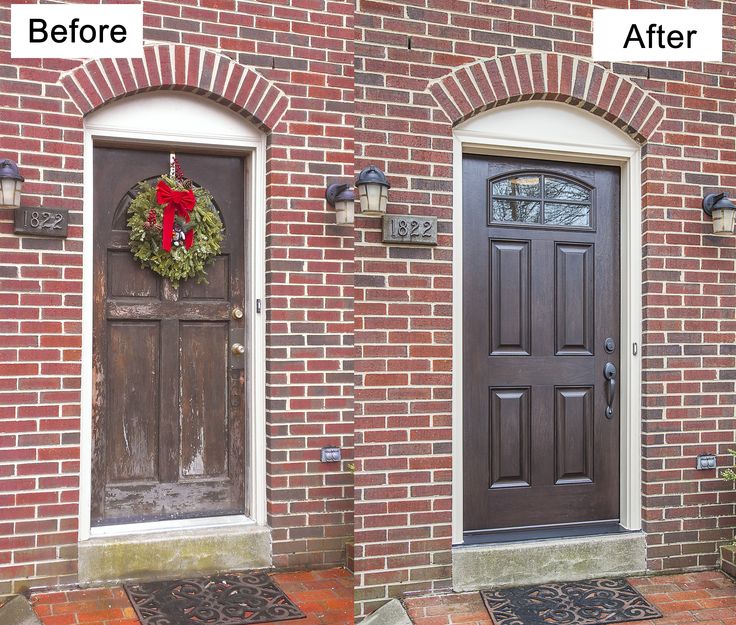
Most exterior doors don’t fail catastrophically — they decline slowly until one winter you notice the foyer is colder, the deadbolt won’t line up, and the kickplate has rusted through. Knowing the signs early lets you replace on your timeline, not in an emergency. Here are the eight clearest signals that your Ohio exterior door is past repair and ready for replacement, plus the cases where a repair still makes sense. In practical terms, the when to replace exterior door question comes down to whether the door, frame, glass, lock, and threshold are failing together instead of as one isolated part.
This is the most common and most actionable sign. If you can feel cold air at your feet, hand, or face when you stand within a foot of the closed door — or you can see a candle flame flicker — your weatherstripping, threshold, or frame seal has failed.
Sometimes drafts are fixable: replacement weatherstripping, a new threshold sweep, or re-shimming the door can solve a single failure point. But if the door is more than 15–20 years old and you’re feeling drafts at multiple spots around the frame, the problem is usually the whole system, not just one component. Replacement is the right answer.
Configure your patio or entry door and get a personalized price range in about a minute — no sales call, no pressure.
Get my instant estimateGet my estimateStand inside on a sunny day with the lights off. If you can see daylight along the top of the door, along the hinge side, or under the threshold, your seal has failed. That gap is letting cold air in during winter, hot air in during summer, and water during heavy rain.
Daylight gaps are also an entry point for insects, rodents (a pencil-width gap is enough for a mouse), and dust. A properly installed exterior door should not show any daylight at the frame perimeter when closed.
An exterior door should swing freely and the deadbolt and latch should engage without effort. If you have to lift, push, or pull the door to get it to latch — or if the deadbolt no longer aligns with the strike plate — your door, frame, or both have shifted.
Causes include foundation settlement, water damage in the threshold, wood frame swelling from moisture, hinge wear, and racking from years of use. Minor adjustments can sometimes correct hinge alignment, but a frame that’s no longer square will keep moving until it’s replaced as a unit.
Push gently on the threshold and the lower section of the door frame, especially on the exterior side. If the wood feels soft, spongy, or you can dent it with a thumbnail, you have rot. Rot in an exterior door frame is rarely a surface issue — by the time it’s visible, the structural wood underneath is usually compromised.
Rot can be repaired in early stages with epoxy and partial wood replacement, but in older Ohio homes — particularly in Cleveland, Akron, and Columbus neighborhoods with original 1920s and 1930s frames — by the time visible rot appears, the right answer is full-frame replacement.
Steel doors are protected by their factory finish. Once that finish is scratched through to bare metal, rust starts. Small surface rust can be sanded, primed, and painted as part of normal maintenance.
Watch for rust at:
If rust has bubbled the paint over a wide area, gone through the steel skin, or perforated the door bottom, the slab is past saving. Replace it.
If your exterior door has decorative glass, sidelites, or a transom, look closely at the glass. Foggy condensation between the panes, visible streaking inside the sealed unit, or distorted reflections all indicate that the gas fill has leaked and the seal has failed.
Failed glass seals can sometimes be replaced as a glass unit on certain doors. On older or builder-grade entries, the glass is integrated into the slab in a way that makes replacement uneconomical compared to a full door swap.
Test the deadbolt and the door knob lock from outside. If you can:
…your door, frame, or strike plate is no longer providing real security. This is a non-negotiable replacement signal. The cost of a new door is far less than the cost of a forced entry.
Builder-grade exterior doors from the 1970s, 1980s, and early 1990s typically reach the end of their useful life around 25–35 years from installation. Insulation foam degrades, weatherstripping hardens and cracks, finishes break down, and the original construction methods are nowhere near current standards for energy efficiency, security, or weather sealing.
If you’re in an Ohio home with original front and back exterior doors that have never been replaced, you are almost certainly paying a winter heating penalty and security premium that a modern fiberglass or steel entry would eliminate. This is the most common replacement scenario we see across Cleveland, Akron, Columbus, and Cincinnati — and the easiest to budget for since it’s not driven by an emergency.
Not every door problem requires replacement. Repair makes sense when:
If your door is older than 15 years and showing multiple signs from this list at the same time, replacement is almost always the more cost-effective long-term answer than chasing repairs.
Most Ohio exterior door replacements are completed in a single day. Installed costs typically run:
For a transparent breakdown, see our full entry door replacement cost guide for Ohio.
Sometimes. Weatherstripping is a wear part — it should be replaced every 5–10 years on a normal-use door. If your door is otherwise sound, fresh weatherstripping plus a new threshold sweep can eliminate drafts. If the frame has shifted or the door no longer closes square, weatherstripping won’t seal a moving target.
Quality fiberglass: 25–50 years. Quality steel: 15–30 years. Wood: highly variable depending on protection from sun and rain — anywhere from 15 to 50 years. Ohio’s freeze-thaw climate and lake-effect humidity in the north put exterior doors under more stress than milder climates, so the lower end of these ranges is common for unprotected entries.
If the frame shows any rot, racking, or settlement issues, yes — full-frame replacement is the right call. In older Ohio homes, even when the frame looks intact, full-frame replacement often produces a meaningfully better long-term result than slab-only swap because the new prehung unit is built to current weather sealing standards.
Single-pane glass on older doors can sometimes be replaced. Sealed insulated glass units (IGUs) on modern doors with foggy or failed seals require either a glass unit swap (where available) or full door replacement. Most builder-grade decorative glass is integrated into the slab in a way that makes glass-only replacement uneconomical.
The savings on a single front door are not dramatic, because a 36″ door is small relative to a home’s total wall and window area. But eliminated drafts, improved foyer comfort, and elimination of cold-floor effect near the entry are immediate quality-of-life improvements. Energy savings should be a benefit, not the primary justification.
Yes. Storm doors and primary entry doors are separate units. We commonly replace the primary door and reuse a quality existing storm door, or replace both as a pair, depending on storm door condition.
Tired of guessing what your door project should cost? Schedule a free in-home estimate. We’ll measure your opening, walk you through fiberglass and steel options, show you how ProVia Signet, Ascent, and Legacy compare, and give you a transparent installed quote — no pressure, no bait-and-switch.
Cleveland: (216) 941-5470 | Akron / Canton: (330) 449-0513 | Columbus: (614) 852-4608 | Cincinnati / Dayton: (513) 776-1805
Or request a free quote online: evolveegress.com/get-a-quote.
Evolve Egress & Exteriors has installed exterior doors, egress windows, and basement upgrades for 30,000+ Ohio homeowners since 2004. In-house crews. Free estimates. Workmanship & manufacturer’s warranties. Learn more about our door installation services.
Our team is ready to assist you. Call one of our offices using the phone numbers below or text us at (614) 852-4608