
Roller wear, frame rot, failed glass seals, and panel sag — when sliding glass doors are worth fixing and when they are not.
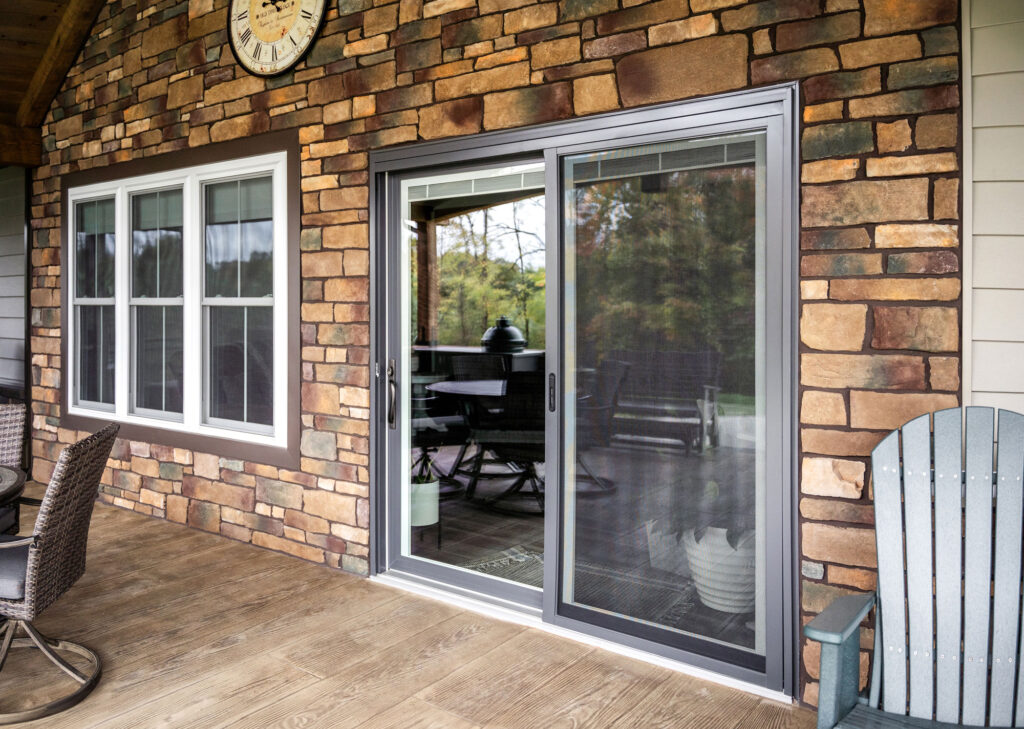
Should you repair or replace a sliding glass door? Repair is usually reasonable when one serviceable part—such as rollers, a latch, weatherstripping, a screen, or one glass unit—has failed and the frame remains square and dry. Replace the complete sliding door when problems overlap, the frame or sill is damaged, water is entering, or the system no longer seals and locks reliably.
A sliding glass door that drags does not automatically need replacement. Dirt in the track, worn rollers, or an out-of-adjustment latch can make an otherwise sound door frustrating to use. But a repair will not solve a rotted sill, racked frame, recurring leak, or multiple aging components.
This guide focuses on sliding glass door replacement and the repair-versus-replace decision. For detailed installed prices across sliding, French, hinged, and multi-panel systems, use the separate Ohio patio door replacement cost guide.
Dragging usually points to debris, damaged track surfaces, worn rollers, incorrect roller adjustment, or a frame that is no longer square. Begin with track cleaning and inspection. If the rollers are serviceable and the frame is sound, repair may restore normal operation.
If new rollers cannot keep the panel aligned, or the door binds differently as Ohio temperatures change, the frame or opening may have moved. Repeated adjustment is then treating a symptom rather than the cause.
Minor track contamination is maintenance. Localized wear may be repairable with compatible components. Severe deformation, corrosion, or damage integrated into the frame can make full replacement more practical, especially when the door is already experiencing seal or security problems.
Condensation that wipes off the room-side surface can be ordinary indoor humidity. Fog or a milky appearance trapped between panes indicates failure of the insulated glass seal. One failed glass unit may be replaceable without changing the entire door, provided a compatible unit is available and the rest of the system is healthy.
Drafts can come from worn weatherstripping, poor latch alignment, gaps around the frame, or failed installation seals. Weatherstripping is a reasonable repair when the door is square and closes with even pressure. Persistent perimeter drafts can indicate a distorted frame or failed installation.
Water is the symptom to take most seriously. It may enter through a failed seal, an improperly flashed opening, a blocked drainage path, a damaged sill, exterior grading, or another part of the wall. Staining, soft trim, swollen flooring, or recurring dampness warrants investigation before cosmetic repairs.
A worn latch can be replaced. A latch that repeatedly loses alignment after adjustment may indicate roller failure, panel sag, or frame movement. Security depends on the complete system—the panel, frame, lock, strike, and anti-lift details—not merely the handle.
| Condition | Repair may make sense when | Replacement is more likely when |
|---|---|---|
| Rollers and operation | The frame is square and dry, the track is usable, and dragging is the only problem | Binding returns after service or accompanies frame movement and multiple failures |
| Track | Cleaning, adjustment, or a compatible localized repair restores smooth travel | The track or integrated sill is badly distorted, deteriorated, or leaking |
| Fogged glass | Only one compatible insulated glass unit has failed and the system remains sound | Multiple units, seals, hardware, and frame components are failing |
| Drafts | Weatherstripping or latch adjustment corrects an isolated air leak | The frame is racked, seals fail broadly, or gaps remain after service |
| Water intrusion | A clearly identified exterior maintenance issue can be corrected without disturbing the door | The sill, flashing, frame, or surrounding materials are damaged |
| Lock or screen | A compatible component is available and the rest of the door performs well | Security, operation, sealing, and parts availability are all declining |
| Style or size | The homeowner wants to retain the existing configuration | The goal is a new size, panel count, finish, glass package, or door style |
Age can provide context, but it should not make the decision alone. A well-installed older door with a single replaceable part may be worth repairing. A newer door with chronic water intrusion or a failing opening may need replacement sooner than expected.
A glass-only swap can be sufficient when the problem is isolated to a cracked or seal-failed insulated glass unit. The frame should remain structurally sound, square, dry, and capable of holding the new unit correctly. The rollers, lock, weatherstripping, sill, and installation seals should also remain serviceable.
Before ordering glass, confirm that the correct thickness, safety-glass designation, coating, spacer, dimensions, and glazing method can be matched. Patio door glass is a large safety-critical component; it is not interchangeable with ordinary window glass.
Glass-only replacement is less compelling when:
Do not replace fogged glass before identifying nearby water. Failed glazing and a leaking sill can occur together, but they are different problems.
Roller service is a strong candidate when the door operates poorly but still closes square, locks, stays dry, and seals evenly. A technician should inspect the roller assemblies, track, panel alignment, frame condition, and adjustment range—not simply spray lubricant into a dirty track.
Cleaning should remove grit that accelerates wear. Use products and methods appropriate for the manufacturer because heavy oils can attract more debris. If the track is physically damaged, the technician must determine whether a compatible repair is possible without compromising drainage or panel alignment.
Replacement becomes more sensible when the panel remains heavy after proper service, adjustments quickly fail, the track is part of a deteriorated sill, or repairs are accumulating across the door. Repeatedly replacing wear parts in a distorted frame rarely creates a durable result.
A draft alone may call for new weatherstripping or adjustment. A leak requires diagnosis of the complete water path. Water can travel behind cladding or along framing before becoming visible inside, so the wet spot may not identify the entry point.
Full replacement is more likely when inspection reveals:
Adding exterior caulk without understanding drainage can trap water instead of solving the problem. A replacement plan should address damaged materials and the opening detail, not merely install a new door over the same failure.
A complete replacement generally includes measuring and ordering the correct system, protecting the work area, removing the existing panels and frame, disposing of old materials, inspecting the exposed opening, completing approved repairs, preparing and flashing the sill, setting the new frame square and level, insulating and sealing the perimeter, installing panels and hardware, restoring standard trim interfaces, testing operation and locking, and cleaning the site.
The proposal should state whether the project is:
Those scopes solve different problems. Ask the installer to show exactly what stays, what is removed, and how the sill and perimeter will be managed.
A two-panel slider remains the standard choice for many Ohio homes. One panel commonly operates while the other remains fixed. It fits familiar openings, avoids swing clearance, and provides a simple path to like-for-like replacement.
A three-panel system suits wider openings and can provide a broader view. Operating arrangements vary, so confirm which panel moves, the usable passage width, screen location, and furniture implications.
Four-panel systems create a larger visual opening and may use center-operating panels. Their width, weight, glass area, header conditions, and installation access require careful planning. If the existing opening must be enlarged, structural and permit considerations enter the scope.
A conversion may be possible within the current opening, but it changes swing clearance, hardware, threshold behavior, screens, and how wind affects the doors. French and hinged configurations generally cost more than comparable sliders. Review the full comparison and approved price guidance in the patio door cost guide.
Replacement cost depends on door width, panel count, frame material, glass package, and whether the opening needs any structural work. For current installed price ranges by door type, see the patio door cost guide.
Price is intentionally secondary on this page because the main decision is whether replacement is necessary and what scope will solve the failure. The cost guide covers the bands and price drivers so this page can stay focused on the repair-versus-replace decision.
Many standard like-for-like replacements can be completed in one day. The crew removes the old system, inspects and prepares the opening, installs and seals the replacement, completes the agreed finish work, and tests the panels and locks.
Additional time may be needed for concealed sill damage, structural opening changes, large multi-panel assemblies, masonry or siding work, or extensive interior restoration. Product lead time occurs before installation and varies with size, color, glass, configuration, and manufacturer availability.
Evaluate the door as a system:
Evolve installs brands including ProVia, Marvin, and Andersen where appropriate to the project. Product selection should follow the opening, priorities, and budget rather than a generic claim that one line is best for every home.
Ohio climate exposes patio door thresholds to snow, rain, humidity, sun, and freeze-thaw cycles. Cleveland-area lake-effect weather places a premium on water management and dependable seals. Columbus homes often present common suburban slider openings but varying siding and municipal conditions. Cincinnati-Dayton properties may include sloped exterior surfaces and exposed thresholds.
Those conditions influence diagnosis but do not replace an inspection. Evolve provides free in-home assessments across its Cleveland, Columbus, and Cincinnati-Dayton service areas.
Repair an isolated, serviceable failure when the frame and sill remain square, dry, secure, and well sealed. Replace the system when failures overlap or the frame, sill, flashing, security, or water management is compromised.
Often, yes. Roller replacement makes sense when compatible parts are available, the track is usable, and the frame remains square. Persistent binding after correct service points to a broader problem.
Some localized track damage is repairable. Severe deformation or deterioration integrated into the sill or frame may require complete replacement. The repair must not interfere with panel alignment or drainage.
Yes, when the correct insulated glass unit is available and the panel, frame, sill, hardware, and seals are otherwise sound. Multiple failures or water damage make full replacement more likely.
Possible causes include failed seals, sill or flashing defects, blocked drainage, exterior grade, frame movement, or surrounding-wall leaks. Diagnose the water path before caulking or replacing parts.
Many standard replacements are completed in one day. Opening changes, concealed damage, large assemblies, masonry, siding, or extensive finish work can require more time.
No. A dirty track, worn rollers, or latch misalignment may be repairable. Replacement becomes more appropriate when sticking accompanies drafts, leaks, fogged glass, frame damage, or recurring alignment problems.
Yes. Evolve offers flexible financing subject to approval and current terms. A free in-home assessment establishes whether repair or replacement is appropriate and provides the exact replacement proposal.
A useful assessment should tell you whether the problem is the rollers, track, glass, weatherstripping, frame, sill, installation, or surrounding opening—and whether a focused repair can reasonably last or a full replacement is the better long-term call. Minor part swaps are sometimes handled by a handyman or glass shop; when the answer is replacement, Evolve installs the new door system.
Get My Estimate for a free in-home assessment in the Cleveland, Columbus, or Cincinnati-Dayton area—we will confirm whether replacement is the right call and price the new door system.
Evolve backs every installation with an industry-leading workmanship warranty, plus the manufacturer’s product warranty (current terms vary by manufacturer).
Our team is ready to assist you. Call one of our offices using the phone numbers below or text us at (614) 852-4608